Introduction to Modern Publishing & Deployment
Workshop Duration: 3 hours Difficulty: 🟡 Intermediate Last Updated: June 2026
Welcome to Publishing & Deployment Mastery
In this afternoon session, you'll learn how to take your applications from local development to production-ready deployments on modern cloud platforms. We'll explore automated workflows, continuous deployment, and documentation publishing strategies that professional development teams use in 2026.
What You'll Build Today
By the end of this session, you will have:
-
Automated Deployment Pipeline
- GitHub Actions workflows for CI/CD
- Multi-environment deployments (staging, production)
- Preview deployments for pull requests
-
Production Deployments
- Deploy React app to Vercel or Cloudflare Pages
- Deploy API to Railway/Render
- Configure custom domains and SSL
-
Documentation Site
- Build docs with MkDocs Material or Docusaurus
- Component documentation with Storybook
- API documentation with OpenAPI/Swagger
Why This Matters
Modern Development Reality
In 2026, deployment is no longer a manual, error-prone process. Professional teams expect:
- Instant Previews: Every pull request gets its own live preview URL
- Automated Testing: Code is tested before it reaches production
- Zero-Downtime Deployments: Users never experience interruptions
- Comprehensive Documentation: Both code and APIs are self-documenting
Industry Standards
The tools and practices you'll learn today are used by companies like:
- Vercel: Edge-first deployment for Next.js and React
- Netlify: JAMstack pioneers with instant rollbacks
- GitHub: Actions-powered CI/CD for millions of projects
- Cloudflare: Edge computing and Pages deployment
Session Overview
Part 1: Deployment Platforms (60 minutes)
Learn the top deployment platforms and when to use each:
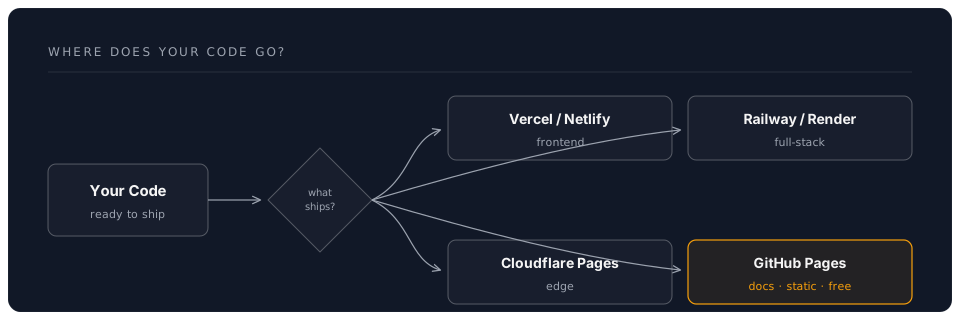
Part 2: GitHub Actions CI/CD (60 minutes)
Build automated workflows that:
- Run tests on every push
- Deploy on merge to main
- Create preview deployments for PRs
- Publish documentation automatically
Part 3: Documentation Publishing (60 minutes)
Create professional documentation sites:
- Component libraries with Storybook
- API documentation with OpenAPI
- User guides with MkDocs Material
- Interactive examples with Docusaurus
Real-World Application
Scenario: Launching a SaaS Product
You've built an AI-powered task manager. Now you need to:
- Deploy the frontend to Vercel with automatic HTTPS
- Deploy the API to Railway with environment variables
- Publish documentation for your REST API
- Create component docs for your design system
- Set up preview deployments so stakeholders can review features
By the end of today, you'll be able to do all of this in minutes, not days.
Prerequisites Check
Before we begin, ensure you have:
- ✅ GitHub account with a test repository
- ✅ Node.js 20+ installed (
node --version) - ✅ Git configured locally
- ✅ Code editor (VS Code recommended)
- ✅ Free accounts on deployment platforms (we'll create these together)
Learning Approach
This is a hands-on workshop. You'll:
- Follow Along: Deploy real applications step-by-step
- Experiment: Modify workflows and see instant results
- Troubleshoot: Learn common issues and how to fix them
- Apply: Use these skills on your own projects
💡 Pro Tip: Keep a deployment log of what you try today. You'll reference it constantly in future projects.
What Makes 2026 Different?
If you learned deployment a few years ago, here's what has changed:
| Old Way (2020) | Modern Way (2026) |
|---|---|
| Manual FTP uploads | Git-based deployments |
| Single production environment | Multi-environment (staging, preview, prod) |
| Manual SSL certificates | Automatic HTTPS everywhere |
| Separate CI/CD tools | GitHub Actions built-in |
| Static docs only | Interactive, searchable docs sites |
| Manual config | AI-assisted deployment configuration |
Success Metrics
By the end of this session, you should be able to:
- Deploy a React app to production in under 5 minutes
- Set up a GitHub Actions workflow from scratch
- Configure environment variables securely
- Create preview deployments for pull requests
- Publish documentation that updates automatically
- Troubleshoot deployment failures using logs
Let's Get Started!
Ready to make your projects production-ready? Let's dive into the exciting world of modern deployment and publishing.
Next: 01_concepts.md - Understanding Deployment Platforms
Quick Reference
Key Platforms We'll Use
- Vercel: React/Next.js deployment
- Railway: Backend API deployment
- GitHub Actions: CI/CD automation
- MkDocs Material: Documentation sites
Important Links
Let's ship to production! 🚀