Introduction to Agent Orchestration & Safety
From Single Agents to Agent Systems
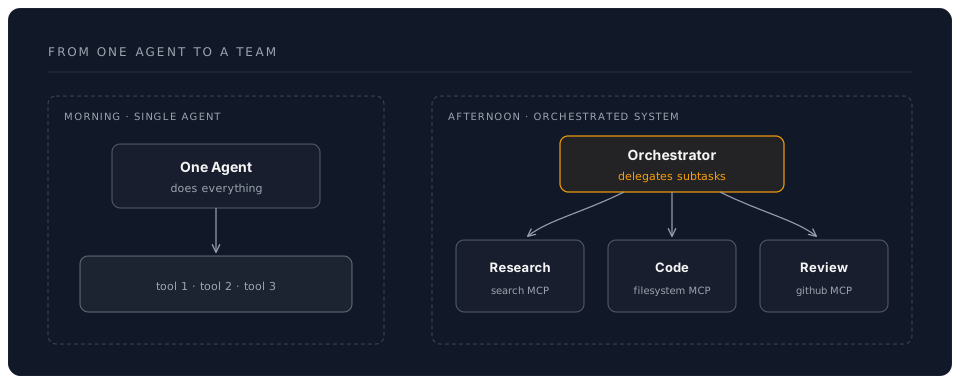
This morning you built individual agents that reason, use tools, and solve problems. This afternoon, we scale up: how do you coordinate multiple agents, keep them safe, and manage costs in production?
The Orchestration Challenge
A single agent with a few tools works well for focused tasks. But real-world problems often require:
- Specialisation: Different subtasks need different expertise (research, code review, testing)
- Parallelism: Independent subtasks should run concurrently, not sequentially
- Scale: Large codebases, multi-document research, and complex workflows exceed what one agent context can handle
- Safety: Autonomous agents need guardrails -- cost limits, approval gates, and sandboxing
The 2026 Orchestration Landscape
Agent orchestration has matured from experimental multi-agent frameworks into practical, production-ready patterns:
| Approach | Tool | Best For |
|---|---|---|
| Subagent delegation | Claude Code subagents | Software development, file operations |
| Pipeline workflows | Claude Code hooks + workflows | CI/CD integration, automated reviews |
| Graph orchestration | LangGraph | Complex state machines with branching |
| Role-based teams | CrewAI | Content creation, research teams |
| Custom orchestration | Anthropic Agent SDK | Domain-specific multi-agent systems |
Why Safety Is Non-Negotiable
When agents operate autonomously, things can go wrong:
| Risk | Example | Mitigation |
|---|---|---|
| Cost explosion | Agent loops indefinitely, burning tokens | Token budgets, iteration limits |
| Destructive actions | Agent deletes files or force-pushes to main | Approval gates, restricted permissions |
| Data leakage | Agent sends sensitive data to external API | Network restrictions, audit logging |
| Hallucinated actions | Agent calls non-existent API endpoints | Tool validation, error handling |
| Cascade failures | One agent's error propagates through the system | Circuit breakers, independent error handling |
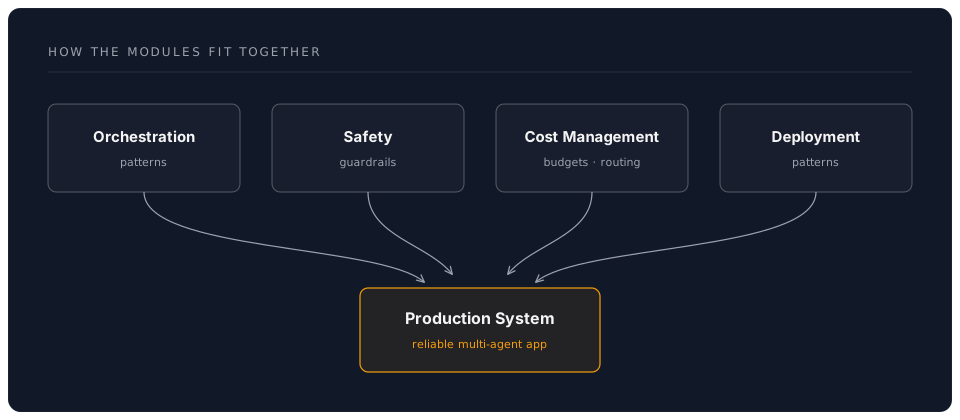
What You'll Learn This Afternoon
1. Orchestration Patterns
- Subagent delegation (Claude Code's model)
- Pipeline and fan-out/fan-in patterns
- Graph-based workflows (LangGraph)
- Role-based agent teams (CrewAI)
2. Safety & Guardrails
- Token budgets and cost caps
- Human-in-the-loop approval gates
- Sandboxed execution environments
- Audit logging and observability
3. Cost Management
- Model selection strategies (Opus vs Sonnet vs Haiku)
- Prompt caching for repeated contexts
- Efficient context management
- Monitoring and alerting
4. Production Deployment
- Error handling and recovery
- Monitoring with LangSmith / Helicone
- Scaling patterns
- Testing multi-agent systems
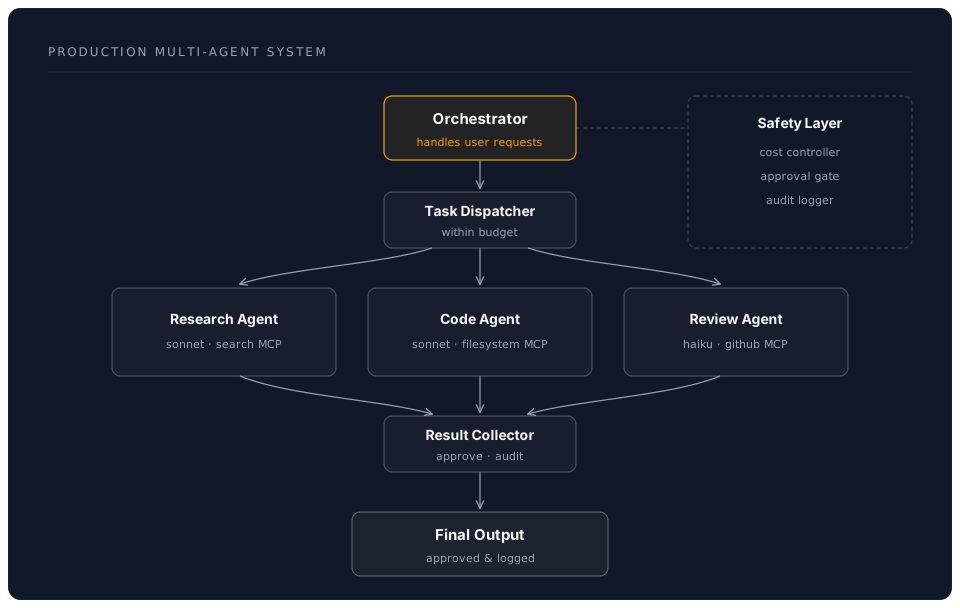
Architecture Overview
A production multi-agent system typically looks like this:
The Afternoon's Flow
| Time | Topic | Activity |
|---|---|---|
| 0:00 | Introduction | This overview |
| 0:15 | Core Concepts | Orchestration patterns and safety theory |
| 1:00 | Hands-On | Build orchestrated agent systems |
| 1:45 | Exercises | Progressive challenges |
| 2:15 | Project Work | Production multi-agent system |
| 2:45 | Assessment | Knowledge validation |